EXPAND Kickoff Conference

Date

June 1 — 3, 2026

Agenda

The focus of the EXPAND kickoff conference will be on introducing and discussing the key scientific questions and opportunities for collaboration. There will be focused sessions for each working group featuring a few presentations and plenty of time for discussion and networking. Participants will also have the opportunity to present posters, which will be up for the entire duration of the conference.

Day 1

Monday, June 1st

  1. 9:00Welcome and EXPAND overview by Frederico Fiuza and Joonas Nättilä
  2. 9:30WG1: Radiative QED Plasmas overview by Marija Vranic and Indrek Vurm
  3. 10:30Coffee break + posters
  4. 11:00WG1: Radiative QED Plasmas session
    • Dmitri Uzdensky — The Role of Radiation Reaction in Relativistic Astrophysical Plasma Processes
    • Gabrielle Grittani — ELI-ELBA: a laser-electron collider for QED investigations
    • Tom Blackburn — Particles in strong fields: theory, simulations and open questions
    • Agnieszka Janiuk — Neutrino cooled hyperaccretion disks in gamma ray burst central engines
  5. 12:30Lunch + posters
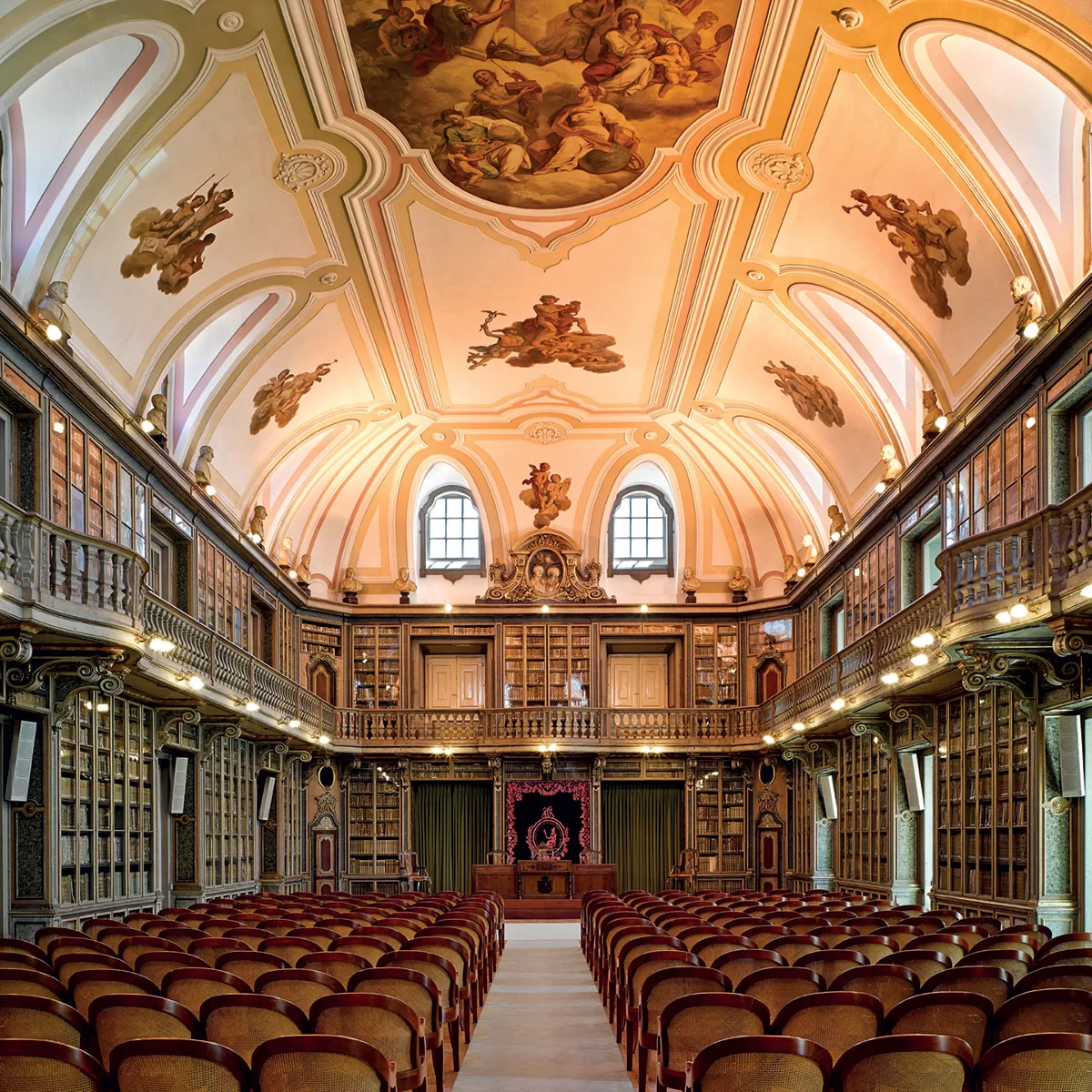
  6. 14:15Brief presentation of the Lisbon Academy of Sciences by José Luís Cardoso
  7. 14:30WG2: Strong-Field QED Plasmas overview by Arno Vanthieghem and Andrey Timokhin
  8. 15:30Coffee break + posters
  9. 16:00WG2: Strong-Field QED Plasmas session
    • Thomas Grismayer — Pathways to Laboratory Pair Plasmas: From Electromagnetic Showers to Non-linear QED Cascades
    • Jan Benacek — Particle-in-cell electromagnetic solver for QED polarization in super-strong magnetic fields
    • Daniel Seipt — On the role of magnetic fields in QED Cascades
    • Tuomo Salmi — Pair Discharges in Millisecond-Pulsar and White-Dwarf Magnetospheres
  10. 17:30End of Day 1
Day 2

Tuesday, June 2nd

  1. 9:30WG3: Relativistic Plasmas overview by Krzysztof Nalewajko and Maria Petropoulou
  2. 10:30Coffee break + posters
  3. 11:00WG3: Relativistic Plasmas session
    • Fabrizio Tavecchio — Probing relativistic plasmas in extragalactic jets with polarimetry
    • Elena Amato — Galactic Pevatrons and challenges in acceleration mechanisms
    • Emanuele Sobacchi — Propagation of EM waves in magnetized plasmas
    • Lara Nava — GRB afterglow radiation as a tool to study weakly magnetised relativistic shocks
  4. 12:30Lunch + posters
  5. 14:30WG4: Plasmas in Strong Gravity overview by Alexandra Veledina and Oliver Porth
  6. 15:30Coffee break + posters
  7. 16:00WG4: Plasmas in Strong Gravity session
    • Greg Marcel — Inferring plasma conditions around black holes from spectral-timing observations
    • Vadim Kravtsov — Polarization as a probe of physics around black holes
    • Mario Riquelme — PIC Results on Particle Heating, Acceleration, and Emission in MRI-turbulent, Collisionless Disks
    • Antonios Nathanail — Can accretion stop? Recent advances to black hole accretion simulations
  8. 17:30End of Day 2
Day 3

Wednesday, June 3rd

  1. 9:30WG5: Computing Core overview by Philipp Mösta and Fabio Bacchini
  2. 10:30Coffee break + posters
  3. 11:00WG5: Computing Core session
    • Luis Silva — PIC methods and their applications to astrophysical and laboratory plasma
    • Ileyk el Mellah — General-relativistic PIC methods and their application to astrophysical plasma
    • Philipp Kempski — Modeling Astrophysical Plasmas Using MHD and Its Extensions
    • Matteo Bugli — GPU-accelerated relativistic MHD and fluid reconnection models informed by kinetic plasmas
  4. 12:30Lunch + posters
  5. 14:30WG6: Training, Dissemination & Communication overview by Brian Reville and Daniel Groselj
  6. 14:45
    Joana Lobo Antunes Science communication and outreach — maximizing the reach and relevance
  7. 15:15Overview of STSMs by Anna Grassi
  8. 15:30Coffee break + posters
  9. 16:00Discussion of internal WG organization
  10. 17:30End of Day 3

Times are indicative and may be adjusted ahead of the meeting.

Practical Information

Accommodation

We don't have a hotel block reservation, but the Lisbon Academy of Sciences is in a very central and walkable area with many hotel and Airbnb options.

Reimbursement

Funded participants can submit reimbursement claims: €150 of daily allowance and up to €500 for transportation expenses. This transport limit may be reviewed in justified cases under the meeting budget conditions.

  • Participants have 15 days after the end of the event to submit their reimbursement claim.
  • Claims must be submitted through the e-COST platform only.
  • Please ensure that your travel tickets by flight or train (invoice + booking confirmation) clearly show your name, departure and arrival times, destinations, the corresponding amount paid, and the service provider.
  • Travel cancellation insurance should be encoded separately from the flight ticket, under “travel - plane”.
  • Car travel (for long-distance travel of 101-1000 km): justify with a parking receipt only.
  • For the reimbursement process, our accounting department will require your VAT number or equivalent tax identification number. Please include it in the “Additional info” section of your e-COST claim.
  • Finally, please remember to sign the attendance lists during the event — these are essential for calculating the daily allowance.

Scientific Organizing Committee

Fabio Bacchini, Frederico Fiuza, Anna Grassi, Daniel Groselj, Philipp Moesta, Krzysztof Nalewajko, Joonas Nättilä, Maria Petropoulou, Oliver Porth, Brian Reville, Andrey Timokhin, Arno Vanthieghem, Alexandra Veledina, Marija Vranic, Indrek Vrum.

Local Organizing Committee

João Biu, Marco Costa, Catarina Figueiredo, Frederico Fiuza (Chair), Thomas Grismayer, Philipp Kempski, Carmo Nunes, Kaushik Satapathy, Marija Vranic

This conference is supported by COST Action CA24149 — EXPAND, funded by the European Union through the European Cooperation in Science and Technology (COST), and hosted with the support of Instituto Superior Técnico (IST) and the Institute for Plasmas and Nuclear Fusion (IPFN).